Part of the Hockey 101 series: positioning and systems basics for beginner to intermediate beer league teams.
Even-strength defensive zone positioning: centers
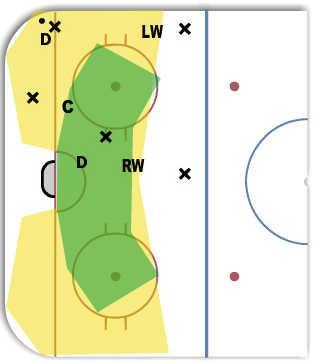 The center’s job in the defensive zone is the hardest of the three forward spots. In short:
- Cover the third attacking forward (be a third D).
- Support your defensemen covering the net-front slot.
- Hold a support spot during battles and hunt loose pucks in the deep zone (yellow area).
- Attack puck carriers moving through seams and scoring areas (green area).
- Stay “d-side” on the open forward (see defensive body position).
- Be available to move up through the middle on a breakout.
A simple look at a center’s basic support positioning away from the puck is in this Hockey Canada training clip:
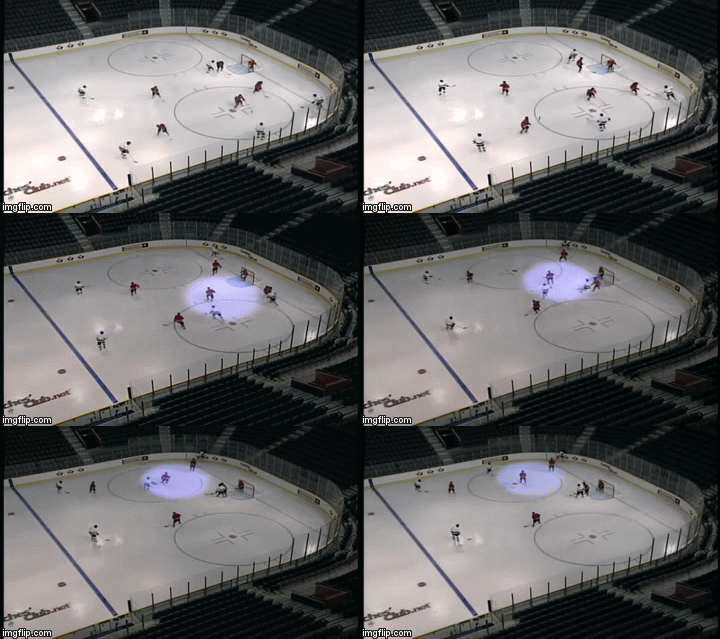
The defensive role still changes a lot based on where the puck is and where the defensemen are.
Puck down low and corners
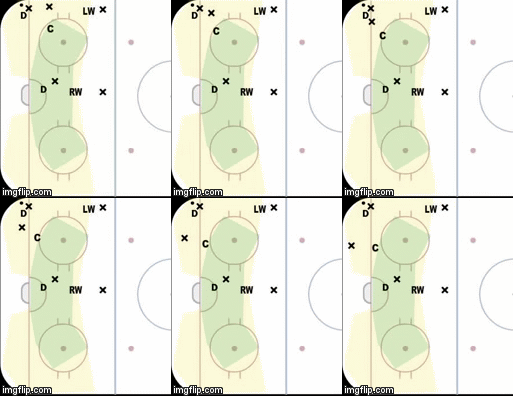
When the puck is behind the goal line or in the corner and a defenseman is attacking the puck carrier, the center’s job is to provide support and stop the outlet pass into a scoring area. Be ready for a loose puck, but keep your body facing both the puck and the third attacking forward, and stay “d-side” on that forward.
Support the near post
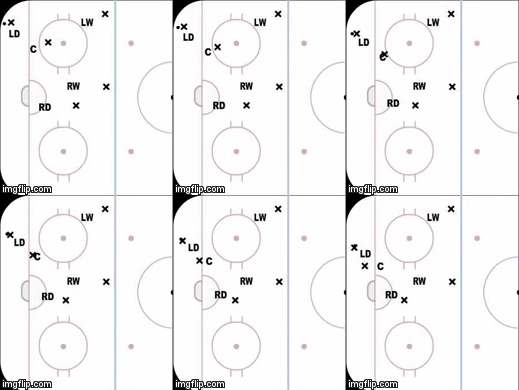
If multiple players are below the goal line, or the play is behind the net, the center often moves to support the near post on the strong side (where the puck is), while the weak-side defenseman supports the far post.
Puck switches sides
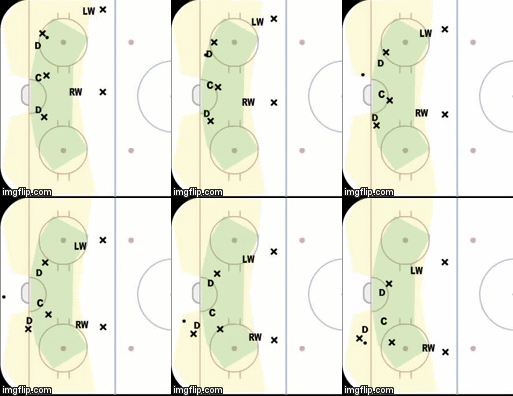
When the puck moves and defenders switch coverage, the center is critical support in the scoring area during the switch. If coverage slips, pick up the open man. If the other team piles players into the scoring area, occupy passing and shooting lanes and help the front of the net.
Puck through the middle
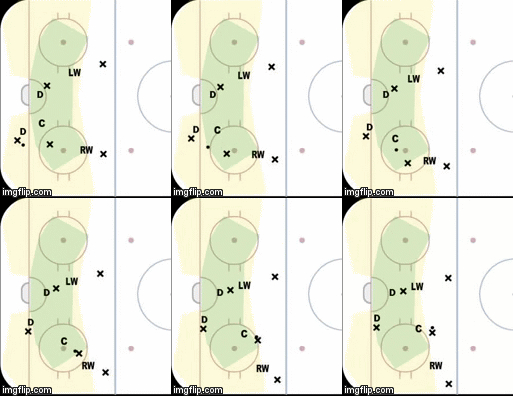
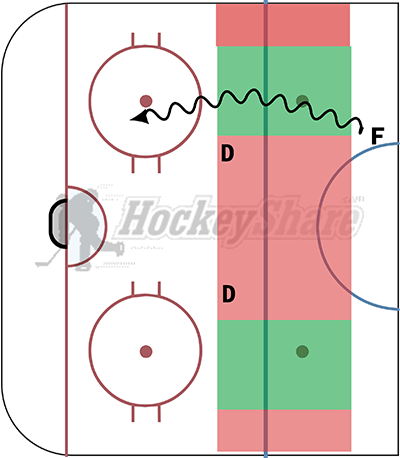
The center is the right player to step up and attack a puck carrier in the middle of the ice. When the puck moves through the circles, know which position that carrier came from.
That middle lane through the circles is too high for a normal defenseman and too low for a strong-side winger.
Puck carrier already engaged
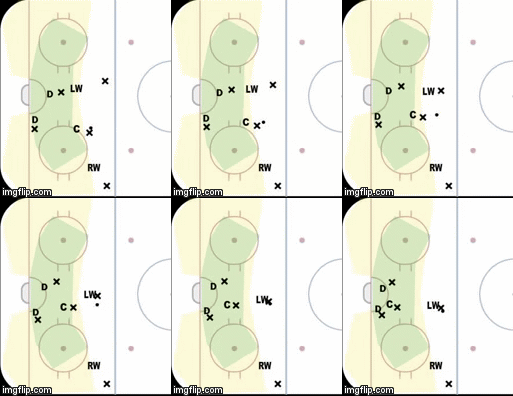
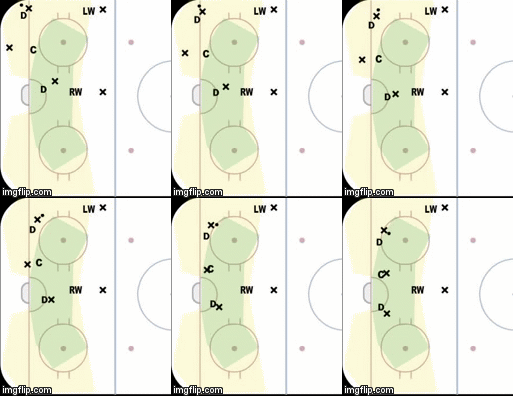
If the puck carrier is in a scoring area already covered or engaged by another player, identify the remaining open spot and cover that instead.
Usually that means dropping to man-on-man on the uncovered player (often the third attacking forward). Become the third defenseman, control the crease and scoring area, and stay “d-side.”
In a scramble or broken play, fall back to the slot and help the defensemen in front of the net.
For the rest of the zone coverage, see defensemen positioning, wingers positioning, and the basic breakout that starts once you win the puck.
Bottom line
Be the third D, stay d-side on the open man, support the net front on switches, and scramble to the slot when the play breaks down.
That works best when the same lines show up every week. If figuring out who is in still happens in a group text, that is what RosterFX is for.
Keep reading: Net-Front and Slot Habits · More Hockey 101